On February 26, 2025, a somber milestone was etched into America’s public health record: a school-aged child in West Texas succumbed to measles, marking the first death from this preventable disease in the United States in a decade. The child, unvaccinated and hospitalized in Lubbock, Texas, became a poignant symbol of a growing crisis—one that health experts have been warning about for years. As the outbreak in rural West Texas spirals, infecting over 130 people across two states, this tragedy has reignited fierce debates over vaccination, public health policy, and the fragility of progress against once-conquered diseases.
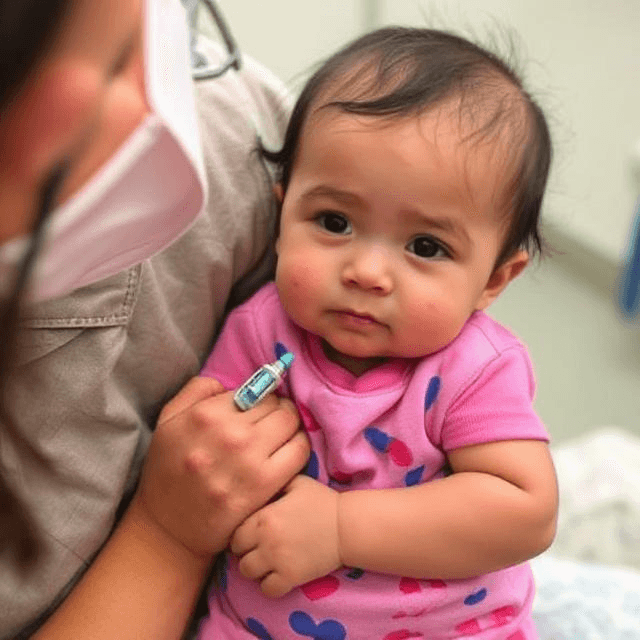
A Death That Shocked a Community
The child’s death occurred at Covenant Children’s Hospital in Lubbock, a city thrust unexpectedly into the national spotlight. Dr. Laura Johnson, the hospital’s chief medical officer and a pediatrician with nearly two decades of experience, expressed disbelief at the situation. “I never thought I’d see a measles outbreak in my career,” she told reporters. “We thought this was behind us.” The child was among roughly 20 unvaccinated patients her team had treated in recent weeks, most battling severe respiratory complications like pneumonia. While details about the child—age, gender, or specific circumstances—remain private to protect the family, the Texas Department of State Health Services confirmed the death was linked to an outbreak that began in late January in Gaines County, a rural enclave near the New Mexico border.
As of February 26, the outbreak had sickened 124 people in Texas alone, with an additional nine cases reported in neighboring Lea County, New Mexico. The majority of those affected are children and teenagers, and nearly all were unvaccinated or had unknown vaccination status. Eighteen patients have been hospitalized, some requiring intensive care for breathing difficulties. This death, the first since a Washington woman died of measles in 2015, underscores a chilling reality: a disease declared eliminated in the U.S. in 2000 is clawing its way back.
Measles: A Foe We Thought We’d Vanquished
Measles is no ordinary illness. It’s one of the most contagious diseases known to humanity, spreading through the air when an infected person coughs, sneezes, or even breathes. A single case can infect up to 18 others in an unvaccinated population, according to the Centers for Disease Control and Prevention (CDC). Symptoms start innocently enough—fever, cough, runny nose, red eyes—but soon escalate into a telltale rash that blankets the body. For most, it’s a miserable but recoverable ordeal. For others, especially young children, pregnant women, or those with weakened immune systems, it can turn deadly. Pneumonia, brain swelling (encephalitis), and even long-term neurological damage are among its grim complications.
Before the measles vaccine debuted in 1963, the U.S. saw 3 to 4 million cases annually, hospitalizing 48,000 and killing 400 to 500 people—mostly children—each year. Vaccination changed everything. By 2000, the U.S. achieved “elimination” status, meaning no continuous transmission occurred for over 12 months, thanks to a robust immunization program. The measles-mumps-rubella (MMR) vaccine, administered in two doses, is 97% effective, and for decades, high vaccination rates kept the virus at bay. So how did we get here?
The Texas Outbreak: A Perfect Storm
The epicenter of this outbreak, Gaines County, offers clues. A rural area with a tight-knit population, it’s home to a Mennonite community where vaccine hesitancy runs deep. Lara Anton, a Texas health department spokesperson, noted that the outbreak likely began in this “close-knit, under-vaccinated” group, where children are often homeschooled, limiting exposure to school-based vaccination mandates. State data paints a stark picture: in the 2023-24 school year, only 82% of kindergartners in Gaines County were vaccinated against MMR, down from 92.55% a decade earlier. That’s well below the 95% threshold needed for herd immunity—the collective shield that protects even the unvaccinated by choking off a disease’s ability to spread.
The outbreak’s origins remain murky. Unlike many past flare-ups tied to international travel, there’s no clear evidence that the first case came from abroad. Genetic testing by the CDC and Texas officials links the strain to D8, a variant circulating in Europe and parts of the Eastern Mediterranean, but no early patients are known to have traveled. Dr. Peter Hotez, a vaccine expert at Baylor University, suspects it may have smoldered undetected in an under-vaccinated pocket before erupting. “This will accelerate for a while,” he warned, pointing to Texas’s broader struggles with vaccine uptake.
By mid-February, the outbreak had ballooned to 48 cases, doubling in mere days. By February 26, it had spread to eight additional Texas counties and crossed into New Mexico. Health officials fear the true toll is higher—possibly 200 to 300 infections—since many cases may go unreported in communities wary of medical intervention. The child’s death, occurring in the outbreak’s fourth week, was a devastating escalation, but not an unexpected one. Historically, 1 in 20 children with measles develops pneumonia, the leading cause of death, and up to 3 in 1,000 die from respiratory or neurological complications.
A Nation at Risk: The Vaccine Hesitancy Crisis
This tragedy didn’t happen in a vacuum. Nationwide, MMR vaccination rates among kindergartners have slipped from 95% in 2019-20 to 92.7% in 2023-24, leaving roughly 280,000 young children unprotected last year, per CDC data. Twelve states and Washington, D.C., now fall below 90%, with exemptions—often for religious or personal beliefs—hitting a record 3% in 2023. In Texas, a hotbed of anti-vaccine sentiment, the picture is bleaker. Hotez calls it “the epicenter” of a movement fueled by misinformation about vaccine safety, amplified by social media and some political figures.
The irony is palpable. Measles’ resurgence is a byproduct of its own defeat. Older generations remember its toll—packed hospitals, grieving families—but today’s parents, spared those horrors by vaccines, sometimes see them as optional. “Measles thrives on being underestimated,” says Dr. Adam Ratner, a pediatric infectious disease specialist and author of Booster Shots. “We’ve forgotten how bad it was.” The COVID-19 pandemic didn’t help, disrupting routine immunizations and deepening distrust in public health institutions.
In Gaines County, the stakes are clear. With nearly 1 in 5 kindergartners unvaccinated, the community was a tinderbox waiting for a spark. When it came, the fire spread fast. Lubbock’s health department has scrambled to respond, opening free MMR clinics that have vaccinated about 70 people since January. But for the child who died, it was too late.
Policy and Politics: A Complicated Response
The outbreak has thrust public health into the political arena. On February 26, during President Donald Trump’s first cabinet meeting of his latest term, Health and Human Services Secretary Robert F. Kennedy Jr.—a longtime vaccine skeptic—addressed the crisis. “We have measles outbreaks every year,” he said, downplaying the event’s severity. He claimed two deaths had occurred, though Texas officials confirmed only one, and suggested hospitalizations were mainly for quarantine—a statement contradicted by local doctors citing respiratory distress as the primary cause.
Kennedy’s appointment has alarmed health experts. A vocal critic of vaccines, he’s pledged to investigate the childhood vaccination schedule, raising fears of further erosion in public trust. New Mexico’s congressional delegation urged him to launch a vaccination campaign and rehire recently fired federal health workers, but his initial response has been tepid. Critics like Ratner see this as a test of America’s public health resolve. “Our successes are fragile,” he warns. “When vaccination levels fall, measles strikes first.”
Historically, policy has been key to measles control. Mandatory school vaccination laws, paired with programs like Vaccines for Children, slashed cases in the 20th century. But today, exemptions are rising, and funding for public health lags. The contrast with 2015’s last U.S. measles death—a woman in Washington exposed at a clinic—highlights how uneven progress can be. That year saw 188 cases; 2024 logged 285. The current outbreak could push 2025’s tally far higher.
A Global Echo and a Path Forward
The U.S. isn’t alone. Globally, measles cases surged 20% in 2023 to 10.3 million, with 107,500 deaths, mostly children under 5, per the World Health Organization. Vaccination coverage dipped during the pandemic, leaving 22 million kids without their first MMR dose last year. Outbreaks ravaged 57 countries, sparing only the Americas—until now. The Texas strain’s European roots hint at how easily borders blur for a virus this contagious.
So what’s next? Experts like Dr. Catherine Troisi, an epidemiologist at UTHealth Houston, predict more cases unless vaccination rates rebound. “Texas is under-vaccinated,” she says. “There are susceptible people.” Community outreach, free clinics, and clear communication could stem the tide, but they’ll need political will—a tall order in a polarized climate.
For now, the death in Lubbock stands as a stark warning. It’s a reminder that measles, though preventable, remains a ruthless foe. It’s a call to action for parents, policymakers, and a nation at a crossroads: protect the progress of decades, or risk losing it to apathy and doubt. As Dr. Johnson put it, “This isn’t just a statistic. It’s a child who didn’t have to die.” The question is whether America will listen.
