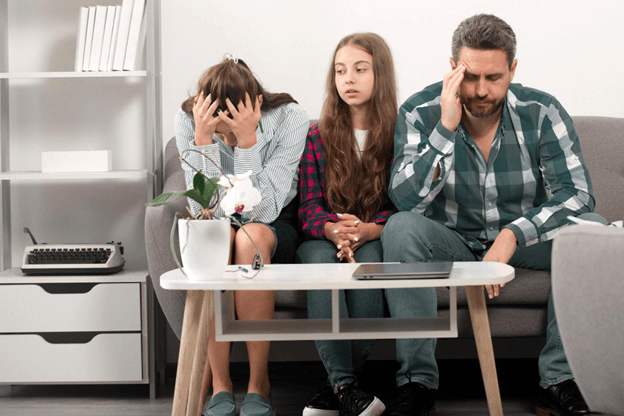
Anxiety disorders are prevalent worldwide, with an estimated 4% of the global population currently experiencing them. Unfortunately, it rarely stays contained to the person experiencing it. When someone in a family struggles with persistent anxiety, it often spills into the emotional environment of the household, shifting dynamics, communication patterns, and even physical health among family members. While this isn’t always obvious at first, the effects tend to ripple out in ways that impact everyone, not just the individual who feels anxious.
The Ripple Effect
This kind of emotional transmission is part of what psychologists call emotional contagion. It refers to the way feelings can be shared, spread, or absorbed by those around us, sometimes without words being spoken. Anxiety is especially contagious. It brings with it restlessness, worry, and hypervigilance, which can easily be picked up by close family members—particularly partners and children. That’s one reason why counselling for anxiety and depression often touches on family relationships, not just the individual experience.
Anxiety Doesn’t Stay in One Room
Another useful way to understand this phenomenon is through family systems theory. This approach sees the family as a connected emotional unit, where changes in one part of the system inevitably affect the whole. In this view, a single person’s anxiety doesn’t happen in a vacuum. It interacts with the existing roles, patterns, and expectations within the family, sometimes reinforcing them, sometimes disrupting them.
For example, when a parent lives with high anxiety, children may take on roles that aren’t developmentally appropriate. One child might become the “fixer,” trying to soothe or accommodate the parent’s moods. Another might withdraw, absorbing the stress in silence. These role shifts can create long-term emotional consequences, including difficulty forming healthy boundaries or managing emotions in adulthood.
It’s worth noting studies have shown that children from inter-generational families are more likely to have anxiety disorders compared to those from nuclear families, highlighting the role family structure can play in the development and perpetuation of anxiety.
When Coping Becomes a Family Project
Partners of anxious individuals often carry a heavy load as well. They may try to “stabilize” the family system by minimizing triggers, avoiding conflict, or even adopting the anxious person’s fears in an effort to maintain harmony. This kind of adaptive behaviour can lead to resentment or burnout over time, especially if it becomes the unspoken norm in the relationship.
Sometimes, the system adjusts in a way that unintentionally maintains the anxiety. The anxious person might receive reassurance or protection from their family, which feels comforting in the short term. But over time, these responses can prevent them from learning to manage anxiety independently. It’s not about blame—everyone is trying their best with the tools they have. But the system, trying to stay balanced, can lock itself into patterns that are hard to change.
What’s more, anxiety tends to narrow attention. It focuses everyone on threats, routines, and “what if” scenarios. That tight focus can crowd out spontaneity, humour, and exploration, which are essential ingredients in a resilient family life. Over time, the emotional climate of the household can start to feel tense or overly cautious, even in the absence of immediate stressors.
Breaking the Cycle
It’s important to remember that family systems are adaptable. Just as one person’s anxiety can disrupt balance, growth in that same person can ripple outward in positive ways. When someone begins to manage their anxiety more effectively—whether through therapy, mindfulness practices, or lifestyle changes—it creates space for other family members to adjust, too. The system can recalibrate, often in healthier, more open directions.
Sometimes, it helps for the whole family to learn about how anxiety works, how it spreads, and how it’s maintained. With that understanding, families can begin to shift unhelpful patterns and build more supportive, flexible dynamics. Even small changes like naming the stress, taking breaks, or practicing curiosity instead of judgment can have a noticeable impact.
Anxiety might start with one person, but the experience is shared. The good news is that healing can be shared, too.
