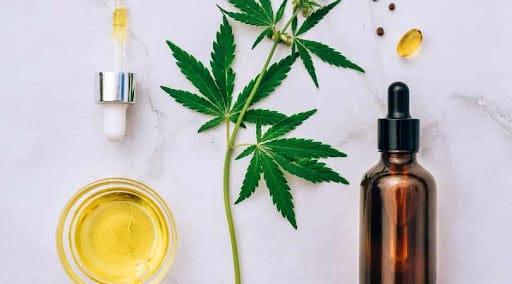
If you are considering using CBD tincture, it’s important to understand the differences between isolate, full-spectrum, and broad-spectrum CBD as each type has unique properties and potential benefits.
It is important to understand these distinctions in order to select a product that aligns with your preferences and needs.
Let’s delve into each type and see which CBD tincture is right for you.
Full-Spectrum CBD Overview
Full-spectrum CBD is renowned for encompassing the complete range of phytochemicals naturally occurring in the cannabis plant. This includes not only CBD but also a variety of other cannabinoids, terpenes, and essential oils.
One of the unique attributes of full-spectrum CBD is its inclusion of trace amounts of THC, the psychoactive compound found in cannabis.
However, it’s important to note that in full-spectrum CBD products, the THC level is kept below 0.3%, adhering to legal standards and ensuring no significant psychoactive effect.
Advantages
Entourage Effect
Full-spectrum CBD leverages the entourage effect, where the combination of cannabinoids, terpenes, and other compounds work together to enhance health benefits.
Comprehensive Benefits
Contains a wide range of naturally occurring compounds from the hemp plant, offering a more comprehensive potential for therapeutic effects.
Minimal THC Content
The THC level is kept below 0.3%, adhering to legal standards and ensuring no significant psychoactive effect.
High-Quality Extraction
Often produced using CO2 extraction, a method known for yielding pure and clean CBD products.
Disadvantages
Risk of False Positives
There’s a potential for false positives on drug tests due to trace amounts of THC.
Mild Psychoactive Effects
Though minimal, the presence of THC might cause slight psychoactive effects.
Not Suitable for THC-Sensitive Individuals
May not be ideal for those who are sensitive to THC or need to completely avoid it.
Variability in THC Content
Requires careful examination of lab reports as THC content can vary, despite being below the legal limit.
Broad-Spectrum CBD Overview
Broad-spectrum CBD is the result of a specific refining process that occurs after initial extraction, where THC is removed while retaining other cannabinoids. This process gives consumers the benefits of the entourage effect, minus THC.
Advantages
No THC Content
Broad-spectrum CBD has completely removed THC, making it a safe option for those who need to avoid this compound for legal, professional, or personal reasons.
Entourage Effect Without THC
Despite the absence of THC, it still offers the entourage effect thanks to the presence of other cannabinoids and terpenes.
Balanced Option
Serves as a middle ground between full-spectrum CBD and CBD isolate, offering a wide range of cannabinoids without THC.
Avoids Psychoactive Effects
Suitable for users who wish to avoid any psychoactive effects that THC might cause.
Holistic Benefits
Retains various cannabinoids, terpenes, and flavonoids known for supporting homeostasis and overall wellness.
Disadvantages
Less Potent than Full-Spectrum
The removal of THC might reduce the overall potency compared to full-spectrum CBD, which includes all cannabinoids.
Varied Effectiveness
Some users might find broad-spectrum CBD less effective than full-spectrum options due to the absence of THC.
Complex Refining Process
The process of removing THC can be complex and might affect the integrity of other cannabinoids and terpenes.
Limited Research
There’s less research on the specific effects and benefits of broad-spectrum CBD compared to full-spectrum and isolate forms.
Isolate CBD Overview
CBD isolate represents the purest form of CBD, extracted and refined to remove all other cannabis compounds. This process yields a product that is over 99% CBD, often in a crystalline or powdered form. Due to its high concentration, it’s particularly favored by individuals requiring a high dosage of CBD, as well as those who are sensitive to other cannabinoids or need to avoid THC entirely.
However, because CBD isolate lacks other cannabinoids and terpenes, it does not benefit from the entourage effect, potentially limiting its overall therapeutic impact compared to full-spectrum or broad-spectrum CBD.
Advantages
Highest Concentration of CBD: Isolate is often 99% pure, providing a high concentration of CBD in each serving.
No THC
Completely free from THC, making it ideal for those who must avoid this compound for legal, professional, or personal reasons.
Purest Form of CBD
Offers the purest form of CBD, with no other cannabinoids, terpenes, or plant compounds.
Suitable for Sensitive Individuals
Ideal for those sensitive to other cannabinoids found in cannabis.
Versatility in Use
Tasteless and odorless, making it easy to integrate into various product formats like gummies, topicals, and oils.
Consistent and Predictable Effects
As it contains only CBD, the effects are more predictable and consistent
Disadvantages
Lack of Entourage Effect
Does not provide the entourage effect since it lacks other cannabinoids and terpenes.
Potentially Less Effective for Certain Conditions
Some research suggests that CBD alone may not be as effective as full or broad-spectrum options for certain conditions.
Strict Purity Requirements
Requires careful quality checks to ensure it’s 99+% pure; even trace amounts of other cannabinoids can compromise its purity.
Limited Research on Efficacy
There’s less real-world evidence and research on the specific benefits and effectiveness of CBD isolate compared to other forms.
How to Choose Between Isolate, Broad-Spectrum, and Full-Spectrum CBD?
Deciding between isolates, full-spectrum, and broad-spectrum CBD can be difficult, but by taking into account the factors we have mentioned below, you can make a more informed choice that matches your needs and preferences.
Choose CBD Isolate If:
Drug Testing Concerns
Opt for CBD isolate if you have upcoming drug tests, as it contains no THC.
Sensitivity to THC
Ideal for those sensitive to THC or other cannabinoids.
High CBD Concentration Needed
Choose this if advised to take high doses of CBD, as it’s the most concentrated form.
Flavor and Odor Preferences
Preferable for those who want flavorless and odorless products.
Strict THC Laws
Suitable for residents in areas with harsh THC regulations.
New to CBD
Good for beginners apprehensive about consuming other cannabinoids.
Choose Broad-Spectrum If:
Entourage Effect Without THC
If you want the benefits of the entourage effect but without THC.
Sensitivity to THC
For those who can’t or don’t want THC in their system for personal, legal, or professional reasons.
Moderate Processing Preference
Less processed than isolate but with no THC.
First-time CBD Users
Ideal for those new to CBD and concerned about THC.
Living in Areas with THC Restrictions
Suitable for places with strict laws on THC.
Choose Full-Spectrum If:
Maximizing the Entourage Effect
If you’re seeking the full range of benefits from the entourage effect.
Dealing with Severe Symptoms
Better for more severe conditions not adequately addressed by other CBD types.
Legal Cannabis States
Recommended for individuals in states where cannabis is legal.
Comfortable with Trace THC
Suitable for those okay with minimal, non-psychoactive levels of THC.
Looking for Least Processed CBD
Full-spectrum is the least processed form, retaining most natural compounds.
Conclusion
Choosing between isolate, broad-spectrum, and full-spectrum CBD depends on individual preferences, needs, and concerns regarding THC content. With the insights provided, we hope you feel better equipped to select a CBD products that aligns with your specific requirements. As you make your choice, remember that personal experience and needs are your best guides in the world of CBD.
